


New regulations on solar power injection
Solar power production is growing rapidly in Switzerland. This is a positive development that supports the energy transition. However, on very sunny days, a large number of installations feed electricity into the grid at the same time, which can overload it.
On January 1, 2026, new regulations aimed at ensuring a stable grid while allowing for continued photovoltaic development came into effect: feed-in from PV installations is limited to 70% of their nominal power (DC), representing a maximum loss of 3% of annual production. The measure, which is part of the Electricity Act, allows DSOs, such as SEIC, to apply it to new installations and existing installations when replacing their inverters.
WHY THIS ADJUSTMENT?
Avoid injection peaks and network overloads
- At noon in summer, when the weather is good, solar production can exceed the capacity of the grid.
- To absorb these power peaks, even if they are rare, the grid would have to be oversized because the infrastructure must be designed to be able to transport all the electricity produced.
BENEFITS FOR EVERYONE
Limiting costs and enabling the continued development of photovoltaic installations
- Reducing injection during periods of overproduction avoids infrastructure expenditure and therefore costs for all consumers.
- The measure frees up space for new solar installations.
IMPACT FOR OWNERS
Consuming part of your own production means you don't lose it.
- Injection is limited to 70% of the nominal power of the installation.
- Studies show that the energy loss associated with this limitation is generally between 1 and 2% of annual production, well below the legal threshold of 3%.
- This loss of less than 3% of electricity can be reduced. The idea is to use the energy directly in the building to produce hot water, air conditioning, charge a vehicle, etc. With an energy management system that controls its electrical installations, self-consumption can be optimized and energy losses greatly reduced, or even completely avoided.
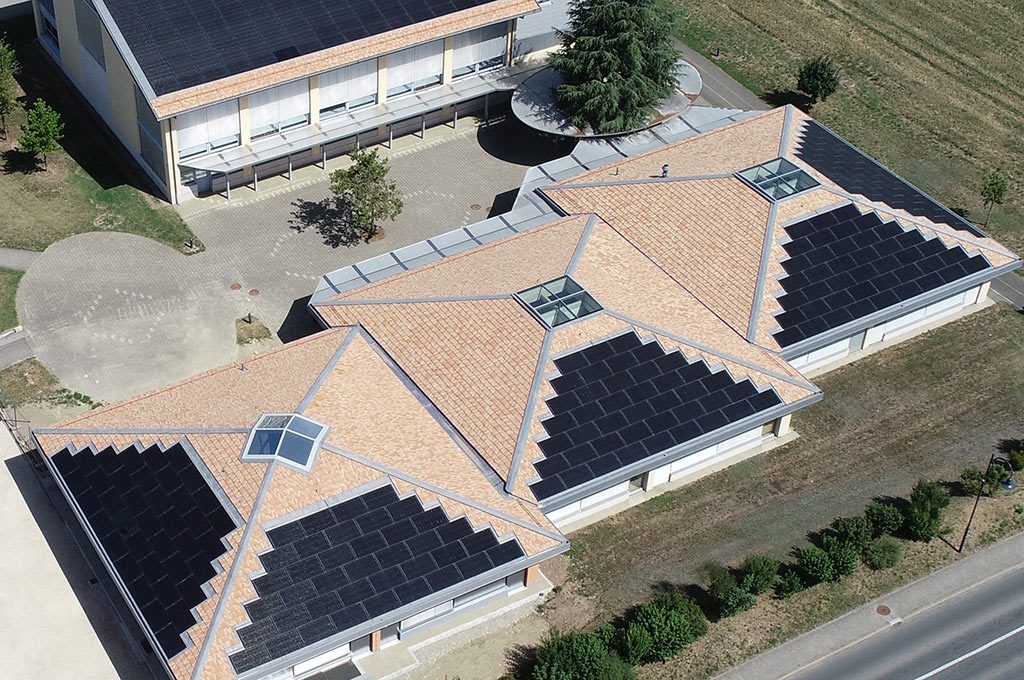
This measure therefore provides a simple and effective way to continue the growth of solar energy in Switzerland while limiting the investments required to strengthen it.
For more details, see the brochure from the Swiss Electricity Association (AES) or watch the video.