2026 rates
To comply with the new legal framework, SEIC has adjusted its transmission tariffs upwards and introduced metering tariffs.
Electricity rate adjustment for 2026
Following the entry into force of the new Electricity Act, electricity bills will rise slightly in 2026. The increase is mainly due to the introduction of metering tariffs (annual subscription of CHF 81.-) and to the adjustment of the calculation of transmission costs in line with new federal regulations.
Thanks to an efficient procurement strategy, SEIC has been able to anticipate the downward trend in electricity market prices and pass on the benefits to its customers.
The electricity bill for an annual consumption of 2,500 kWh - corresponding to a 4-room apartment - will rise :
- in Gland: from CHF 784.68 in 2025 to CHF 849.14 in 2026, an increase of around 8.22%.
- in Prangins: from CHF 744.68 in 2025 to CHF 809.14 in 2026, an increase of around 8.66%.
which represents an increase of CHF 5.37 per month (excluding VAT).
Â
The electricity bill for basic supply customers comprises :
- the energy tariff, i.e. the price of electricity consumed
- tariffs for network use (transmission of energy to the customer) and system services
- metering rate (monthly subscription) introduced from 2026
- taxes and charges levied by the Confederation (including the Electricity Reserve and surcharges for use of the transmission grid), the canton and the communes.
Metering tariffs from 2026
From 2026, a new line will appear on the bill: the metering tariff of CHF 6.75 per month per meter, in accordance with the requirements of Articles 7, 7a and 8 of the Electricity Supply Ordinance (OApEl ) aimed at enhancing cost transparency. This tariff covers the costs of measuring and deploying smart meters.
Note that the notion of a minimum billable amount has been eliminated.
discover the new SEIC mix or SEIC greenproducts
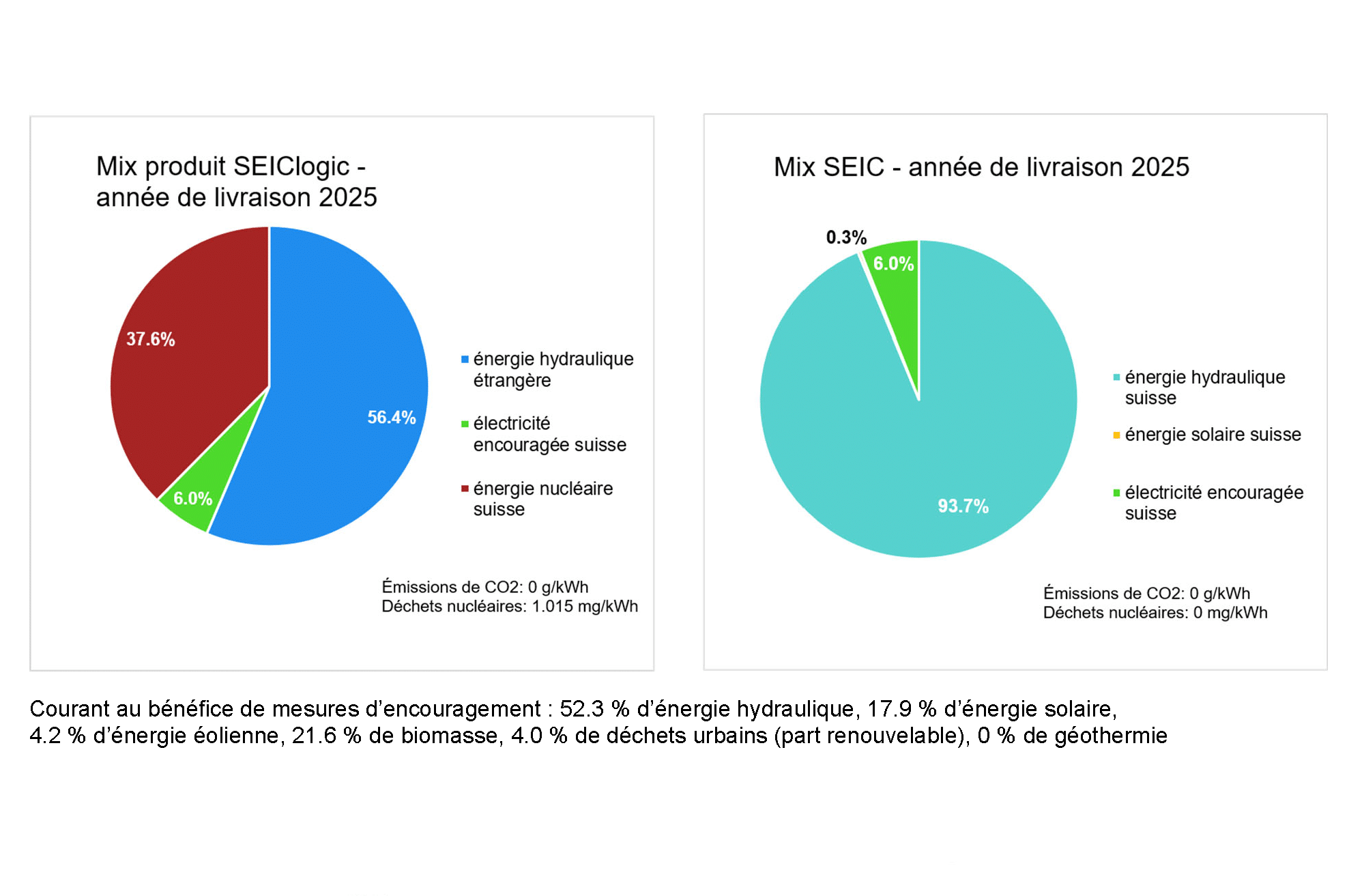
Without any specific request on your part, you receive the SEIC mix product , electricity produced from 70% Swiss renewable energy and 30% nuclear energy. From January 1, 2026, this product will replace the standard SEIC logic product.
SEIC has reviewed its product range to provide you with a standard product with a higher proportion of renewable energy. This is to simplify your choice and already comply with the new legal framework, which by 2028 will require at least 2/3 of the energy supplied to be of Swiss renewable origin.Â
If you want to benefit from electricity from 100% renewable sources, choose our SEIC green product, made up of electricity from hydraulic and solar sources.
Single rate vs. double rate
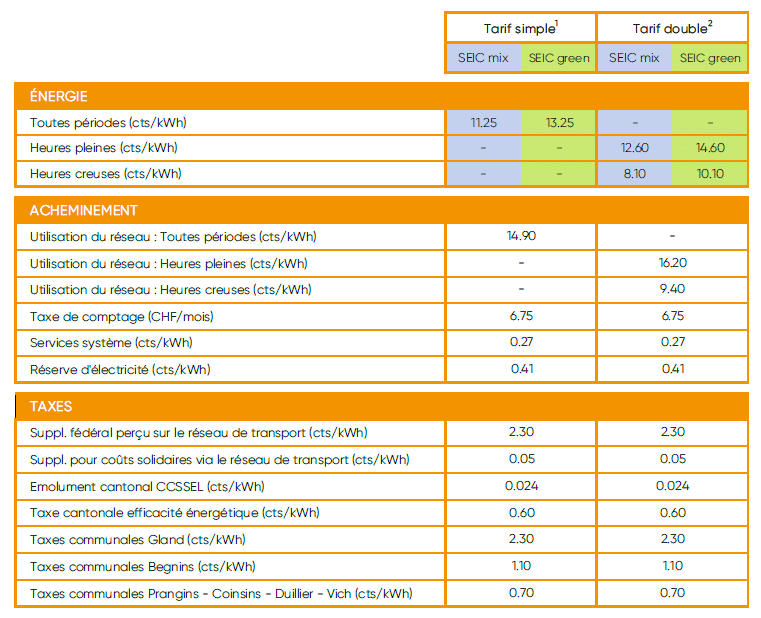
If your meter doesn't differentiate between on-peak and off-peak hours, you'll be billed according to the single-rate principle, which is ideal if you live in an apartment without a water heater or electric heating. You can also, if you wish, submit a request to change or adapt your meter to benefit from the double rate.
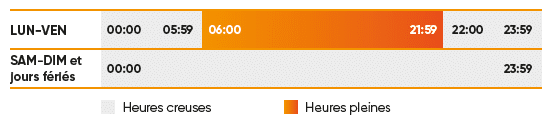
A double rate, on the other hand, is recommended if you can use off-peak hours for more than a third of your consumption. To check that your meters distinguish between peak hours (HP) and off-peak hours (HC), just glance at your bill! If the words "Consommation HP/HC" or "Chauffage HP/HC" appear, you're entitled to the double rate. If not, ask for it.
2026 price list
Single rates, double rates, SEIC mix or SEIC green, federal, cantonal or municipal taxes and fees, find out all about 2026 prices.
Composition of electricity prices
Electricity prices
Routing charges and metering tariffs
Taxes and fees
Please note that SEIC is not in a position to influence this component of the price. It is obliged to deduct these amounts and pass them on to the relevant bodies.
Where does the electricity you use come from?
The electricity distributed by SEIC in 2024 will be 72.84% Swiss renewable energies, the rest being of nuclear origin. The renewable energies supplied are composed of :
- 64.06% hydropower
- 2.19% solar energy
- 6.60% of the electricity generated is subsidized. This national support program is fed by the cost-covering feed-in remuneration (CRF) to which all electricity consumers in Switzerland contribute by paying the CRF supplement, which in 2024 was 2.3 cts/kWh.
Take a closer look at the SEIC 2024 marking table: SEIC Marking table
View the breakdown in graphic form: Mix 2024 provided by SEIC