



Customized electrical installations
Whether it's a new build, conversion or renovation, our specialists can carry out all your electrical installations.
Our services at a glance
Our specialists specialize in the following areas:
- Power supply and device connections
- Improving energy efficiency
- Indoor and outdoor lighting
- Upgrading electrical installations
- Electrical panel (installation, replacement, modification and extension)
- 24/7 conversion, extension, repair, maintenance and troubleshooting
Are you planning electrical work? Do you need advice or simply a specialist? Tell us about your electrical project. Our team of technicians will be delighted to advise you and help you carry out your project.
contact us
Tell us about your electrical project! We'll be happy to advise and support you.
Why entrust your project to us ?
- Complete management of your electrical project, including advice and technical studies
- Our technicians guarantee the quality and safety of your electrical installations
- Improve the energy efficiency of your facilities
- Our specialists find the best installation points, both aesthetically pleasing and practical
- Teams of technicians with specific skills
- 24/7 service, maintenance and troubleshooting
- A hardware store
They've put their trust in us, have you?
Renovation
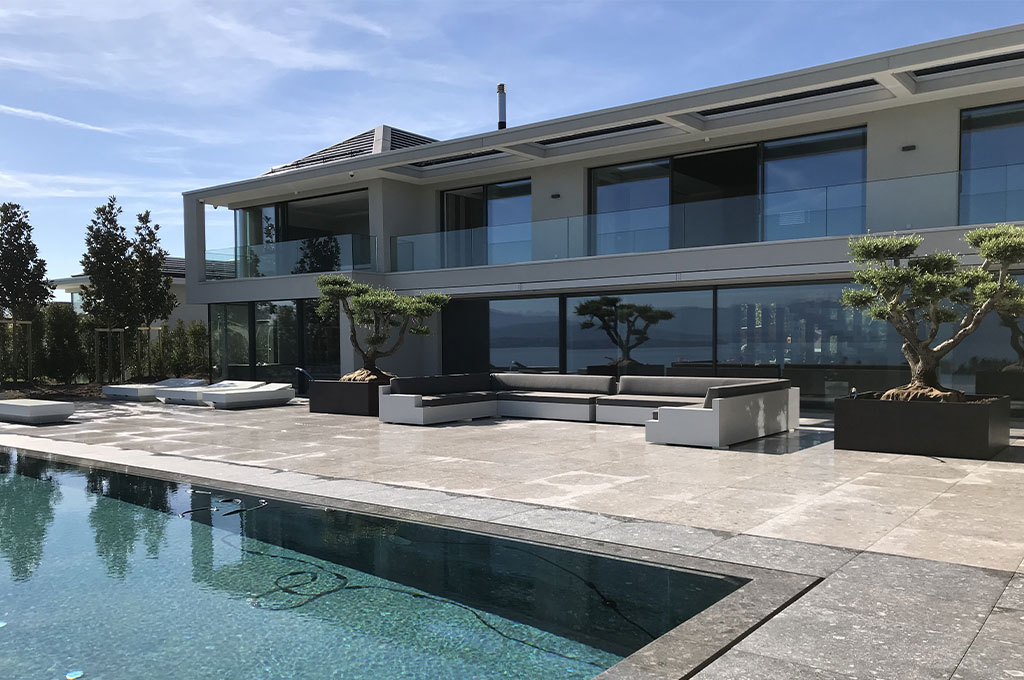
Complete conversion of a house in Nyon
Renovation of the electrical installations of a mansion and its exteriors.
Construction
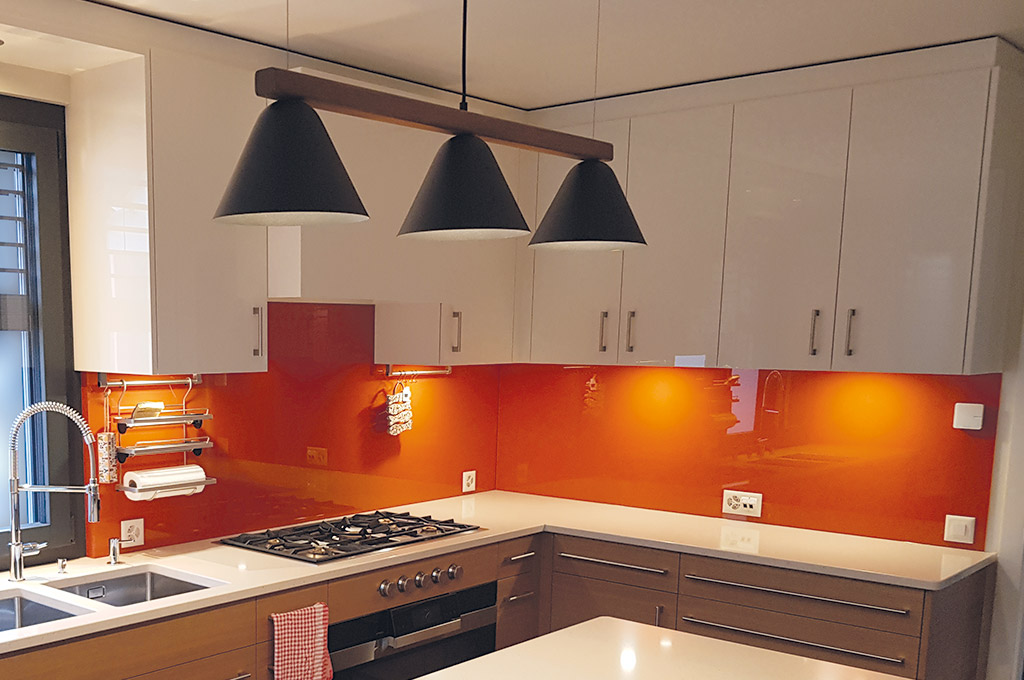
Construction of two villas in Dully
Electrical installation project for two mansion houses and their exteriors.
Transformation
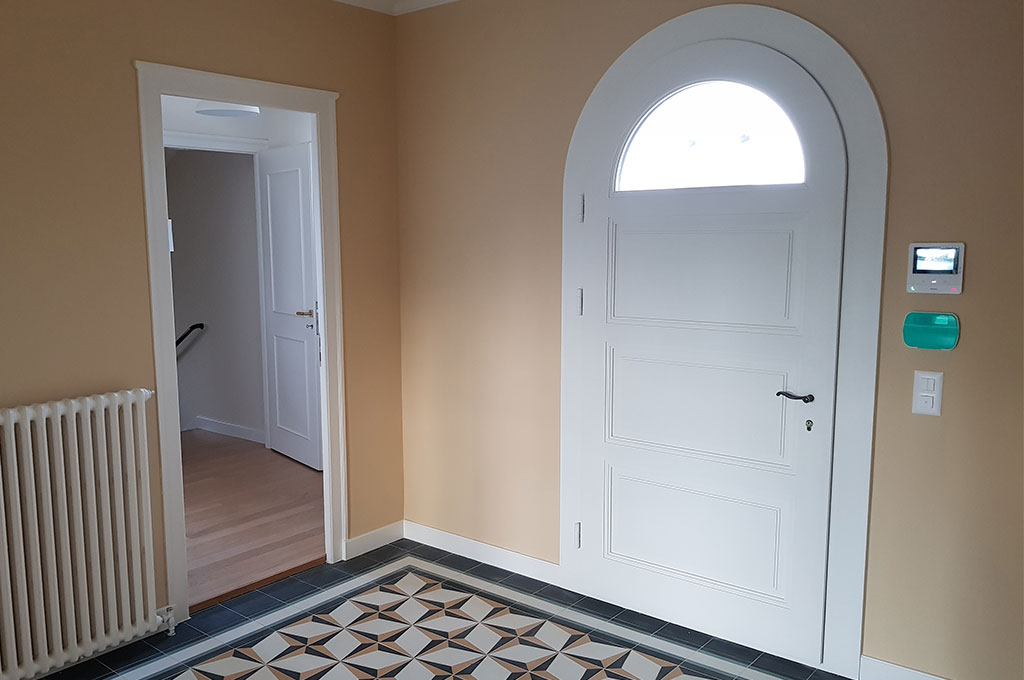
Complete conversion of a villa in Genthod
Renovation of the electrical installations of a mansion and its exteriors
What sectors are we active in?
We design and carry out all electrical installations in rental properties, condominiums, villas, offices, shops, industry, crafts and public buildings.
Troubleshooting FAQs
It's vital to have a reliable, state-of-the-art electrical installation. Electricity is more than necessary to keep your building running smoothly, but it can also be harmful if installed incorrectly.
When you call on SEIC for your electrical projects, you guarantee the quality and safety of your work. Our technicians are certified and have many years' experience. This means they have all the qualifications required to meet your electrical needs, whatever your sector of activity.
Finally, working with SEIC also means benefiting from the know-how of a local partner and a single point of contact, thanks to the expertise of multidisciplinary professionals.
Power outages can occur for a number of reasons:
- Meteorological disturbances:
for example, during a storm, lightning can cause damage to equipment connected to the power grid. - An aging installation
- Poor maintenance of areas where animals such as rodents live:
this can lead to repeated short circuits. - Infiltration and damp
To find out the cause of your breakdown, it's important that our SEIC technicians come on site to make a reliable diagnosis.
So don't hesitate to contact our professionals on 022 364 31 31. They are at your service 24/7.
The intervention of a SEIC specialist is strongly required in various cases of breakdown. These include :
- Complete or partial power failure in your home/building
- Circuit breaker malfunctions
- Voltage variations
- Faulty equipment causing power surges
- Electric strike or access problems (gate, wicket door, etc.)
- Problems with electric shutters
To diagnose and implement safe and secure electrical troubleshooting solutions, the intervention of SEIC professionals is imperative. We always intervene as quickly as possible, 24 hours a day, 7 days a week.
The invoice will be established according to the day and time of the intervention and is based on the collective labor agreements.
Lighting FAQ
Luminaires, low-energy bulbs, LEDs, cables, plugs, sockets - find all the electrical products you need for your lighting and test them out in our showroom in Gland.
In Switzerland, the profession of electrician is protected and regulated. Only those holding a general installation permit issued by the ESTI (Swiss Federal Inspectorate for Heavy Current) in accordance with the OIBT (Ordinance on Low-Voltage Installations) may work in this field.
Before buying the different lamps for your ceiling, accent or mood lighting, it's essential to have a clear idea of what the final result will look like. There are four main types of lighting.
First of all, there's general lighting, which is used to illuminate an entire room, whether it's the living room, bedroom, kitchen, bathroom or outdoors. This light source needs to be powerful enough to reach every nook and cranny. In a large room, it's useful to have more than one source so that the room is sufficiently lit without having a lamp that's too dazzling. You can also add wall sconces to soften the mood. General lighting lamps can be grouped together in a chandelier, provided that the ceiling height is sufficient.
After general lighting, there are accent lights. Mounted on walls, furniture or the floor, these sources create a comfortably lit area without flooding the room with light. With spot lighting, you can focus light on the dining room, TV area or kitchen worktop. In the bedroom, spot lighting at the headboard makes reading more comfortable. In the bathroom, this type of lighting is a precious asset for applying make-up or shaving.
It's also common practice to install lighting in closets and cupboards to make it easier to find items.
Among the existing types of lighting, there are also decorative fixtures whose aim is to highlight the interior or exterior design of the home. The precision of their beam is paramount to precisely highlight a corner of a wall, knick-knacks, paintings or works of art.
White light is available in a wide variety of shades, each with a specific effect on the human organism. A distinction is made between the colors of light: warm white, neutral white and daylight white. Incandescent bulbs have always been warm white, while LED lamps are available in all three color ranges. On some recent models of LED bulbs or floor lamps, it's even possible to change color and intensity gradually.
Light can have both a stimulating and calming effect on human beings. Warm, low-temperature light has a calming, relaxing effect, while cool light makes rooms appear larger. A high proportion of blue, which is particularly strong in cold light, has a biologically stimulating effect and promotes concentration and performance. Warm light, on the other hand, promotes the sleep hormone melanin.
FAQ Electrical installation upgrade
Your distribution system operator (DSO) will send you a request for inspection by post, giving you 6 months to carry out the periodic inspection of your electrical installation.
Depending on the type of property you own, you'll need to do this at different intervals. Your DSO will specify, in its letter, the periodicity that applies to your property and the deadline to be respected.
Once the inspection has been carried out, and if no defects are found, a safety report and a test and measurement protocol are sent to the DSO by an independent inspection company commissioned by you. As the owner, you will need to keep a copy of these documents until the next inspection.
In the event of a fault in your electrical installation, you will need to appoint an approved electrician to carry out the repair work in accordance with the fault report drawn up by the independent inspection company. Once the work has been carried out, the safety report is sent to you and your distribution network operator.
At the beginning of 2002, the Ordinance on Low-Voltage Electrical Installations (OIBT) came into force in Switzerland. As owners are fully responsible for their electrical installations, they are obliged to have them inspected periodically, at their own expense.
The aim of the Low-Voltage Installation Standard (NIBT) is to protect people, animals and property against the risks and damage that may arise from the normal use of the installation. The NIBT or SN 411000 contains rules for the programming, construction and testing of electrical installations supplied with nominal voltages up to 1000V AC or 1500V DC. It is based on the Electrical Installation Act (EIA), the Ordinance on Heavy Current (VVV), the Ordinance on Low-Voltage Electrical Equipment (VLV) and the Ordinance on Low-Voltage Installations (VLV). The ITLV is issued by Electrosuisse, through the Technical Commission 64 (TC 64), which, with the help of representatives from several branches and associations, maintains, modernizes and expands it. EIT.swiss is a member of TC 64, representing the interests and concerns of the electrical industry.
Can't find the answer to your question? Contact us